

Rules with examples
Check sequences, sets and declarations against illustrated examples.
RULES EXPLAINEDPlay one free guided hand with Master Rummy, learn the rules behind every move, and decide what to practise next. Free to play, no registration and no payment.
Draw one card. Drop one card. Complete your first pure sequence in seconds. Free, instant and no sign-up.
Your first 13 cards are coming to the table…
Pure sequence complete.3♥–4♥–5♥–6♥ uses one suit, consecutive ranks and no Joker.
Try the free Master Rummy practice hand, read the 13 card rummy rules, or find app support.
Check sequences, sets and declarations against illustrated examples.
RULES EXPLAINEDComplete a hand with clear prompts and explanations at every step.
FREE TO TRYClassic, Pool, Deals, and free practice tables for every experience level.
4 GAME MODESRead troubleshooting guides or contact support about installation and account access.
SUPPORT GUIDESLearn the basic flow of Indian rummy — sequences, sets and a valid declaration — before you play a hand on Master Rummy.
Start with 13 cards dealt by the secure table system.
Arrange cards into valid sequences and sets. A pure sequence is essential.
Check your hand carefully and declare only when every card is valid.
 00:25
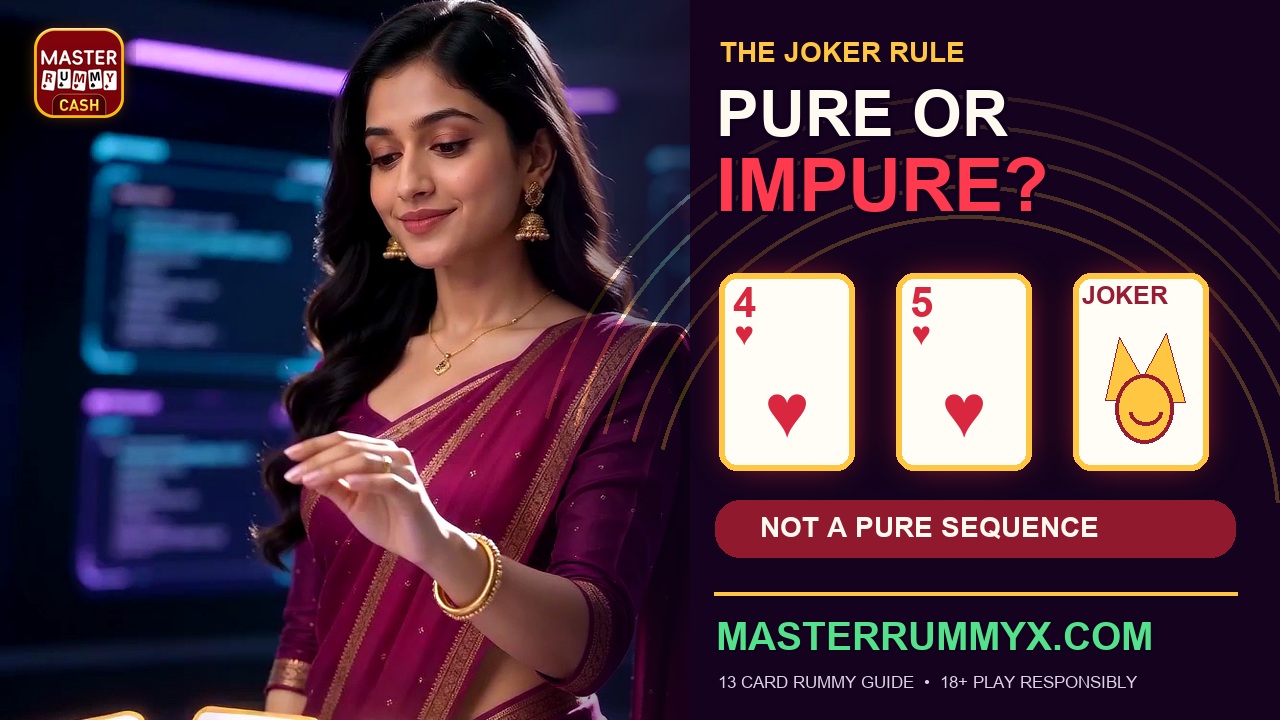
00:25Can a Joker fill the missing 6♥ in 4♥–5♥? It can complete an impure sequence, but a substitute Joker cannot make the group pure. Watch the example, then check why a declaration still needs a separate pure sequence. 18+ only. Educational content. Play responsibly.
 00:51
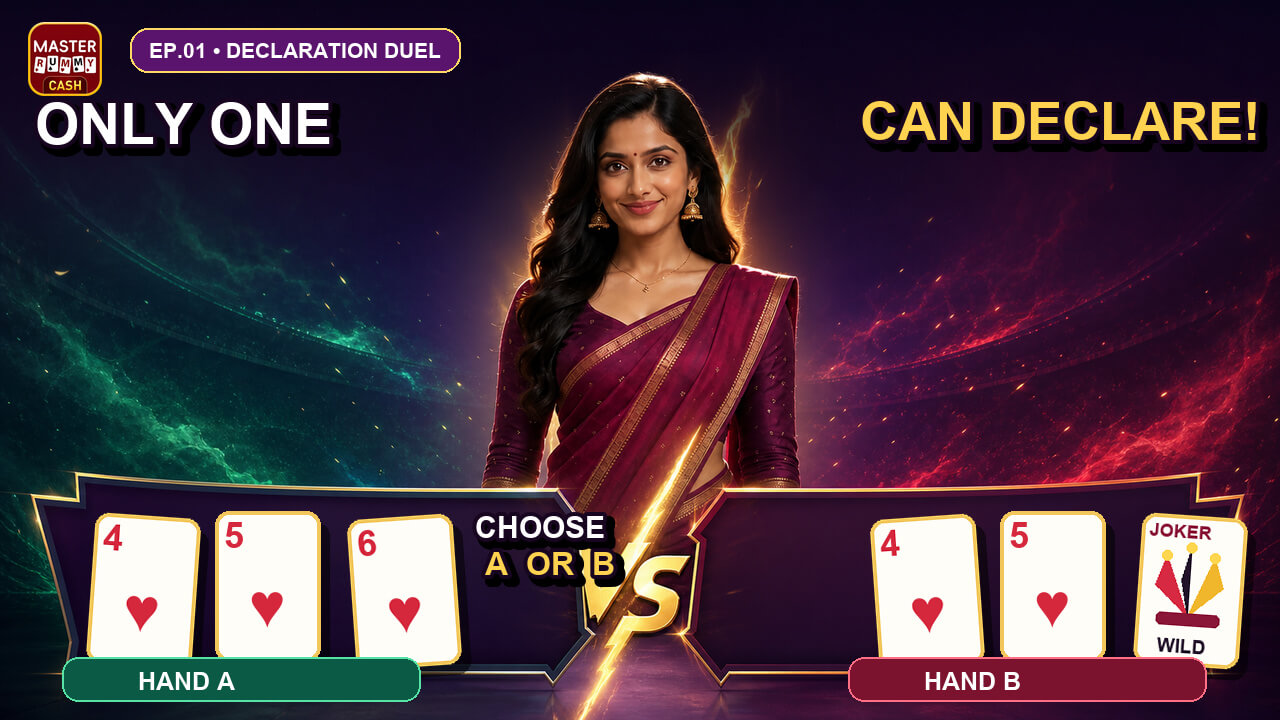
00:51Compare two 13-card hands and choose which one can declare. The explanation checks the pure sequence and remaining groups. 18+ only. Educational content. Play responsibly.
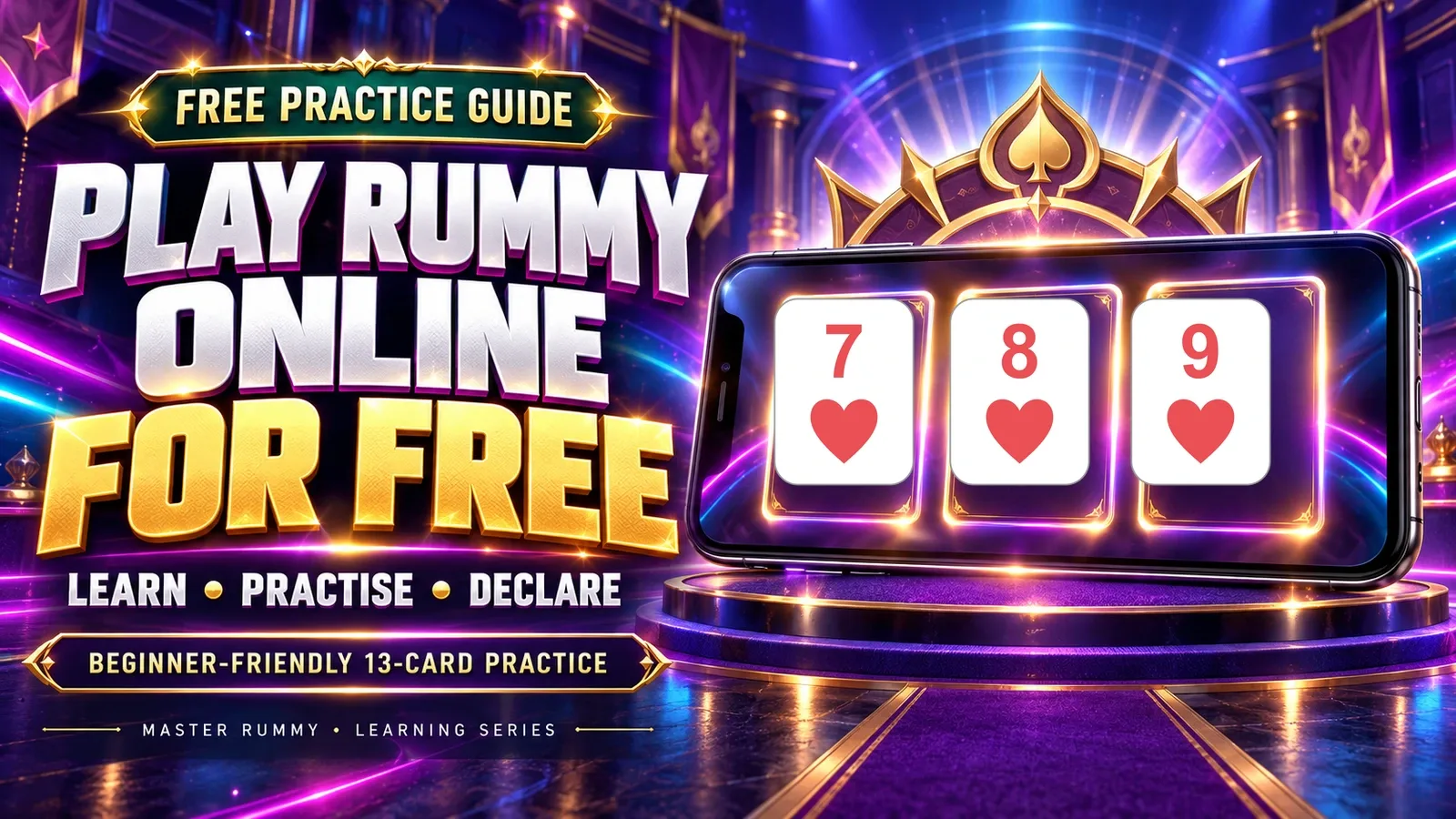
Play a free 13-card Rummy hand without registration or payment. Learn to draw, discard, use Jokers and check a declaration.
Should you take the open discard or draw from the closed deck? Compare the card’s value to your hand with what the move reveals.
Compare Points, Pool and Deals Rummy: how many rounds you play, how scores add up, and what to practise before choosing a format.
In 13-card Indian Rummy, players draw and discard cards to form sequences and sets. A valid declaration needs at least two sequences, including one pure sequence, with every remaining card in a valid group.
Learn the complete Rummy rulesEach player starts with 13 cards. Drawing temporarily gives you 14; discard one to return to 13 before completing your turn.
See how a 13-card Rummy hand worksDraw one card, arrange your groups and discard one card on each turn. To declare, group all 13 cards into valid sequences or sets, including at least two sequences with one pure sequence.
Read the complete 13-card Rummy guideShare your rummy experience and see what other players are saying.